Hand Mixer or Stand Mixer?
By Love Coma Cakes Editorial · March 1, 2026 journal issue · Published October 10, 2026
Choose a mixer around your baking frequency, counter space and actual recipes, with a practical look at attachments and ownership costs.
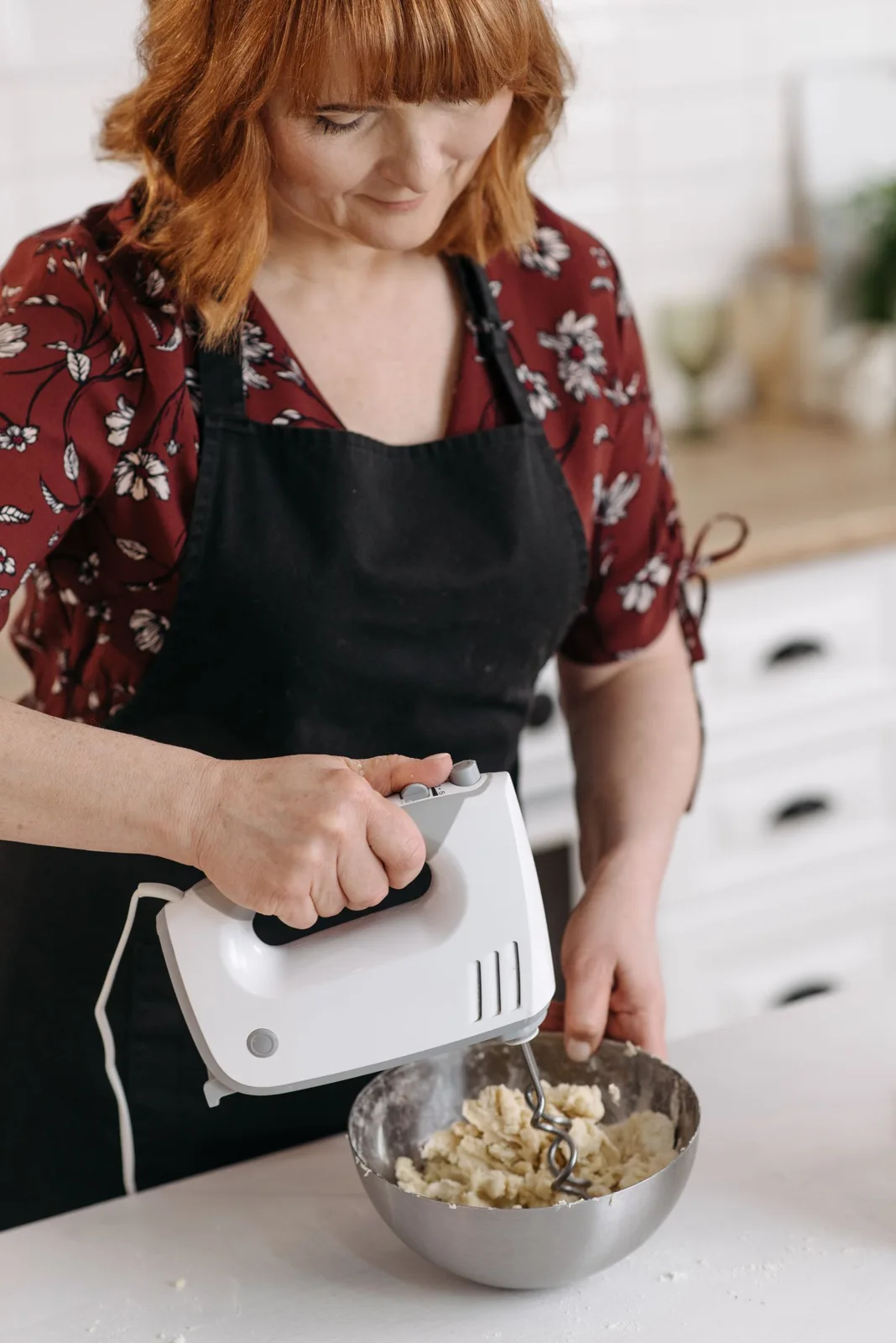
Illustrative photography by Pavel Danilyuk / Pexels. Images show editorial inspiration, rather than a product or recipe test.
A mixer should make a recurring task easier. It should not require you to invent a new baking habit to justify the purchase. For someone making an occasional birthday cake in a compact kitchen, the right answer may differ from that of a household preparing several batches each weekend. Begin with your recipes, your available storage and how comfortably you can handle the equipment. The most expensive appliance is not automatically the most useful one.
Our buying advice is research-led. Links may take you to retailers; any paid relationship is identified beside the link. See our affiliate disclosure.
Write down the work you need done
List the last few things you baked and the next few you realistically intend to make. Identify which steps require mechanical mixing and which can be done with a spoon or whisk. A cake mixed briefly by hand may not benefit enough from an appliance to justify the space. A repeated task that tires your hands deserves closer consideration.
Check recipe quantities as well as frequency. Small batches can behave differently in a large bowl, and an appliance’s minimum useful quantity matters alongside its maximum capacity. Read the manufacturer’s guidance for both. Do not assume that a large advertised bowl means every small recipe will mix effectively without intervention.
| Your main need | Direction to investigate | Important tradeoff |
|---|---|---|
| Occasional light mixing | Hand mixer | You hold and guide it throughout |
| Regular larger batches | Stand mixer | More weight, space and expense |
| Very limited storage | Hand tools or compact hand mixer | More manual involvement |
| Specific dough recipes | Model approved for that workload | Capacity and operating limits matter |
What a hand mixer asks of you
A hand mixer is usually easier to store, but you still need a suitable bowl, a stable work surface and a comfortable grip. Consider the weight in your hand, the position of speed controls and whether changing speed feels intuitive. A cord should reach a safe outlet without crossing a wet area or the cooker.
Look at how the beaters are removed, cleaned and stored. Check whether the lowest speed is described clearly and whether the appliance’s intended uses match your recipes. Attachments that resemble dough hooks do not automatically mean a mixer can handle every bread dough. Use the maker’s approved quantities, operating duration and cooling requirements.
What a stand mixer asks of your kitchen
A stand mixer needs a stable surface and space for its moving parts. Measure the appliance with its head raised or bowl mechanism opened, not just in its closed position. Check overhead cupboards and the working clearance needed to add ingredients. If it will live in a cupboard, consider how often you can comfortably lift it onto the counter.
The bowl, whisk and other attachments all require washing and drying space. An appliance that stays on the counter may be convenient, but only if it does not displace the preparation area needed to use it. Think through the entire workflow: ingredients, mixing, transferring batter and cleaning. A strong motor specification alone does not answer those questions.
Compare practical specifications
Read official information about supported tasks, batch limits, included attachments, care and warranty terms. Watts alone are not a reliable way to compare real-world performance across different designs. Focus on whether a manufacturer explicitly supports the task and quantity you need. Treat claims from a sales photograph as incomplete until the instructions explain the workload.
Check whether replacement bowls, beaters and other wear parts are available in your market. Verify the current model number carefully; accessories may fit one version and not another. If considering refurbished or used equipment, account for missing parts, condition, return terms and applicable warranty coverage. An apparently lower purchase price can be less attractive after required replacements.
Resist attachment-led shopping
A long attachment list can distract from the central job. Ask which accessories you will use this month, which require another purchase, and where each will be stored. A mixer bought mainly for hypothetical future pasta or ice cream projects may be a poor fit for a kitchen that needs straightforward cake mixing today.
Buy the core appliance for an established need. Add accessories after you understand its routine and limitations. If your main problem is inaccurate measuring or awkward cake release, a mixer will not necessarily solve it. Choosing baking scales and choosing your first cake pan may point toward a smaller, more relevant purchase.
Make a decision you can maintain
Before ordering, read the return policy and inspect the manual if it is available. Confirm electrical compatibility for your location, intended household use and cleaning instructions. Decide where the appliance and accessories will live. A simple written comparison of two suitable models is usually more helpful than an endless list of unrelated machines.
If neither option closes a genuine gap, keep using your current tools. If one task repeatedly makes baking uncomfortable, select equipment suited to that task and its actual batch size. The right purchase supports your existing life; it does not need to become a new hobby in its own right.
Frequently asked questions
Will a stand mixer make every cake better?
No appliance replaces following a suitable recipe. Mixing method and duration still matter, and some cakes are designed for hand mixing. Choose equipment for convenience and appropriate workload rather than a promised universal improvement.
Can a hand mixer knead bread?
Only use it for dough when the specific manufacturer permits that task and quantity. Follow the manual’s limits. Similar-looking attachments do not establish equivalent capabilities across models.
Which is better for a small apartment?
Measure storage and working space, then consider how often the appliance will be used. A hand mixer may be practical, but even that is unnecessary for recipes that work comfortably with existing tools. Explore more equipment decisions in Baking.
This story belongs to our March 2026 editorial issue. This edition was published and reviewed on October 10, 2026. Our guidance is based on editorial research and practical planning, not an undisclosed hands-on product test.