Choosing Food Containers for Your Routine
By Love Coma Cakes Editorial · September 1, 2026 journal issue · Published October 10, 2026
An everyday guide to container sizes, materials, lids and storage, built around the meals you actually pack and put away.
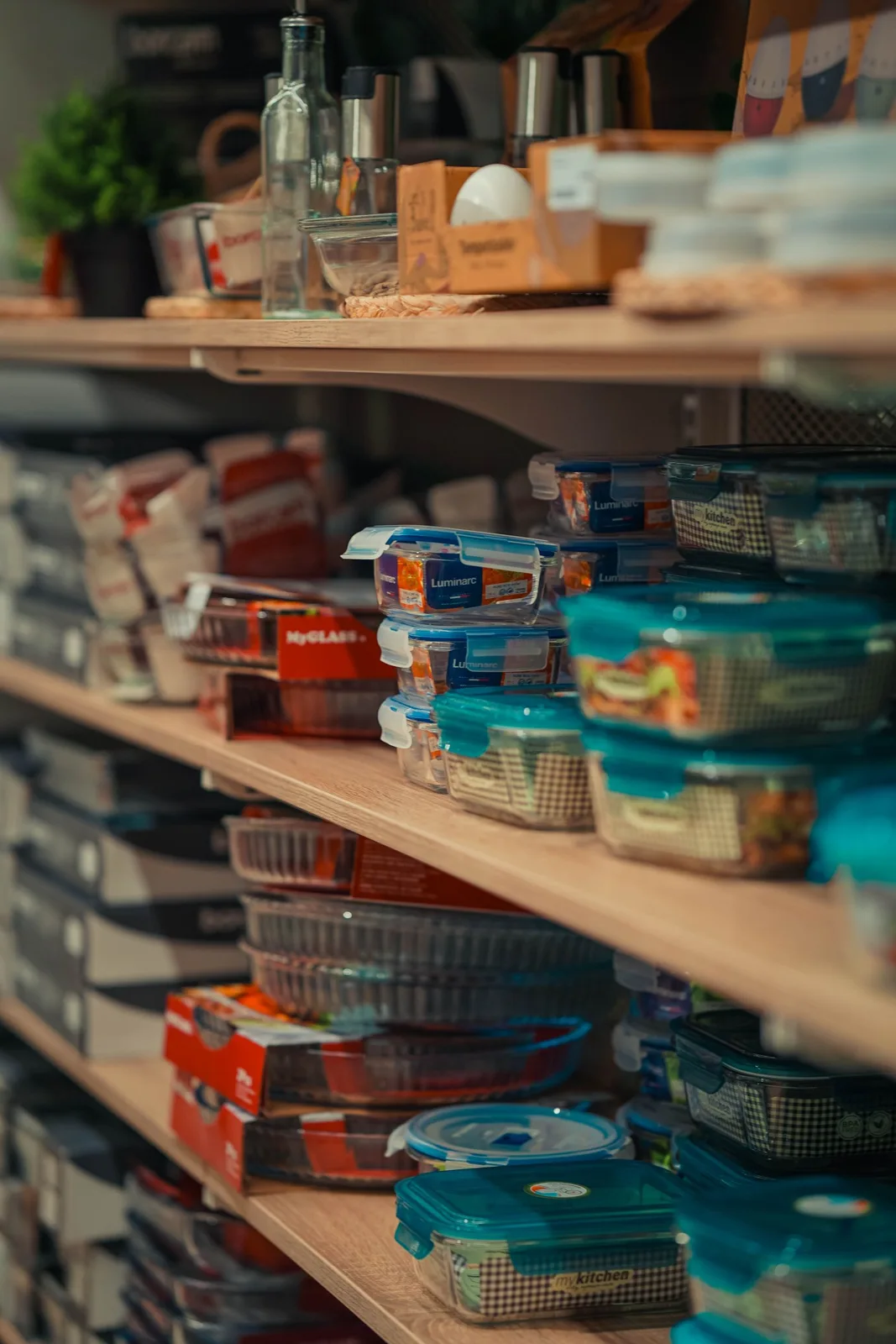
Illustrative photography by Théo Cold / Pexels. Images show editorial inspiration, rather than a product or recipe test.
The container cupboard often tells a story of good intentions: a large set bought for meal planning, a few takeaway tubs, a glass dish without its lid and a tiny box that fits almost nothing. Choosing better containers starts with a quieter question than which material is best. What do you need to carry, store or serve during an ordinary week?
Our buying advice is research-led. Links may take you to retailers; any paid relationship is identified beside the link. See our affiliate disclosure.
A commuter carrying lunch on foot has different priorities from someone putting leftovers on a refrigerator shelf. A container that works well in one setting may add unnecessary weight or take up awkward space in another. Build a small system around real jobs and expand it only when a gap appears.
Begin with three actual meals
List something you regularly store after dinner, something you pack for lunch and something you keep ready as an ingredient. Estimate the portion you want to fit, then compare containers with food you already serve. Capacity in milliliters or cups is useful, but the shape also matters. A long sandwich needs a different footprint from a serving of rice.
Measure the refrigerator shelf, bag and cupboard where the containers will live. Include the lid and any clips in those measurements. Check whether the lid opens comfortably when the container is filled. A compact stack in the cupboard is helpful only if the pieces are also pleasant to use separately.
Compare materials by their practical demands
| Material or construction | Where it may suit a routine | Tradeoff to examine |
|---|---|---|
| Glass body | Storage that also goes to the table | Heavier to carry and can break |
| Lightweight plastic | Everyday packed meals | Care limits vary by product |
| Stainless steel | Carrying food without a heavy glass body | Contents are hidden; appliance use is restricted |
| Flexible pouch | Certain snacks or space-conscious packing | Cleaning and drying inside takes attention |
These are starting points, not universal performance claims. Check the exact item’s food-contact suitability and manufacturer directions. Oven, freezer, dishwasher and microwave compatibility can differ between the body, lid, seal and clips. Do not infer those permissions from the material alone.
For glass, read any instructions concerning temperature changes and handling. For all materials, replace pieces when their condition or manufacturer guidance calls for it. A container is not made suitable for every task because another product that looks similar can do it.
Pay special attention to lids
Lids decide whether a system stays convenient. Look at how many parts must be removed for cleaning and whether you can reach the grooves. Removable seals can be useful, but they also create another part to keep track of. Follow the product instructions when disassembling and reassembling them.
If carrying liquids, look for an explicit claim that the exact container is suitable for that use, and follow its closure and transport instructions. “Airtight,” “leak-resistant” and “leakproof” are not terms to treat as automatically interchangeable. A rigid lunch bag may help keep a container upright, but it does not change the container’s stated limitations.
Check whether replacement lids or seals are available before buying an expensive system. Common lid sizes can simplify storage, although the compatibility needs to be confirmed for the actual range. Similar dimensions across different brands do not guarantee a reliable fit.
Choose a useful range of sizes
Two medium containers may be more useful than a set containing one of every possible size. Think in portions: a single lunch, a shared side dish, a small ingredient. Avoid filling the cupboard with tiny boxes unless you frequently pack sauces or snacks that need them.
Rectangular shapes often fit neatly beside one another, while rounded interiors may be easier to access with a spoon. Deep narrow containers can be inconvenient for food you want to mix or eat directly from the box. Shallow shapes use more shelf area. Decide which compromise suits the meal instead of choosing one silhouette for everything.
If you use containers to plan food ahead, follow reliable food-safety guidance for handling, cooling, storage and reheating. A well-designed box does not extend storage time by itself. Keep relevant ingredient dates and instructions accessible rather than relying on memory.
Plan the cupboard before the purchase
Nested bodies save space, but several sizes can mean several incompatible lids. Stand lids in a measured compartment or pair each one with its body if that is easier for the household. The best arrangement is the one people can maintain after washing up.
Take an inventory before adding more. Match the existing lids, remove pieces that are no longer usable and identify the actual missing size. Our small-kitchen storage guide offers ways to test an arrangement before buying organizers.
Frequently asked questions
Is a large starter set better value?
Only if you will use most of its pieces. Compare the useful containers in the set with the cost and storage requirements of buying those sizes individually. An unused piece still needs a home.
Can I microwave the lid if the body is microwave-safe?
Check the instructions for the lid specifically, including any venting requirements. Permission for one part does not automatically apply to the others.
Should containers match?
Matching can simplify lids and stacking, but it is not a requirement for an effective kitchen. A few complementary pieces may better suit a varied routine. Browse Kitchen & Home for more buying decisions based on daily use.
This story belongs to our September 2026 editorial issue. This edition was published and reviewed on October 10, 2026. Our guidance is based on editorial research and practical planning, not an undisclosed hands-on product test.